Client Results

For places that work beautifully.

Real projects. Measurable outcomes. See how Leo delivers for facility managers and building operators.

All Case Studies

Construction

Top Seasonal Retailer – National Rollout

Multi-location seasonal retail rollout executed across multiple zones under compressed timelines.

100% On Time Attainment
5 Days Bid-to-Scope Turnaround
100% Tracker visibility
Construction

Leading Primary Care Provider – Flatiron, NYC

Tenant fit-out completed across multiple phases under active building operations in Manhattan.

100% Value Engineering
Full Tenant Continuity
All Phases closed out
Construction

Leading Primary Care Provider – FiDi

Active medical office renovation in a mixed-use residential and commercial building with zero downtime.

Uninterrupted Business Operations
100% TPP inspections passed
All Phases closed out
HVAC & Technology

Proactive HVAC Management via Remote Monitoring

How Impact Service Group's Nebula REM turns equipment data into proactive dispatches — before units fail.

7 Live data points
Real-time Performance alerts
Proactive Dispatch model
Locksmith & Access Control

Fortune 100 Big Box & Wholesale Club Retailer – National Locksmith Program

Standardized lock and key systems across 2,500 locations, achieving #1 vendor status in under 6 months.

2,500 Locations served
30K+ Service calls
30% Cost savings
Locksmith & Access Control

Top-5 Global Financial Institution – ADA Compliance Program

Full ADA compliance across 400 bank locations in 9 states — delivered $1.2M under budget and a full year ahead of schedule.

$1.2M Under budget
99.5% First-time completion
1 Yr Early Ahead of schedule
Locksmith & Access Control

Top-3 National Telecommunications Retailer – Nationwide Access Retrofit

700-location nationwide lock and access control retrofit across all 50 states, completed in 3 months — on time and on budget.

700 Locations
3 Months Full delivery
70% Self-performed
Locksmith & Access Control

Top-10 U.S. Financial Institution – Badge Reader & Access Control Rollout

Scaled from a single-region engagement to a 7-state program, converting from subcontractor to acting General Contractor.

7 States Program expansion
1 → 5 Program managers
Lead GC Role achieved
Locksmith & Access Control

National Premium Grocery Chain – Vendor Consolidation & Scaling

Absorbed 40 vendors, increased service volume by 400%, and became the top-ranked vendor across the national network.

400% Volume increase
#1 Vendor ranking
100% Benchmarks met
Locksmith & Access Control

Federal Postal & Logistics Agency – After-Hours Access Control

Integrated QR-based digital access with physical entry across postal facilities, enabling secure after-hours customer access while protecting restricted areas.

Secure After-hours access enabled
1+ Year Ongoing program
Expanding Preferred vendor scope
Locksmith & Access Control

Statewide Public Charter School Network – Compliance & Lock Upgrade

42 campuses brought into full Texas legislative compliance in 3–4 months, delivered 6% under budget with an ongoing service relationship secured.

42 Campuses completed
6% Under Budget
Full State compliance

Construction

Top Seasonal Retailer – National Rollout

Multi-location seasonal retail rollout across multiple zones under compressed timelines

100%
On Time Attainment
5 Days
Bid-to-Scope Turnaround
100%
Real-time tracker visibility

A rollout defined by speed, uncertainty, and scale

  • Scope unknown at award

    Unlike a conventional project, the complete scope of work at each location wasn't fully known until the project was underway — requiring planning, procurement, and vendor coordination all in real time with no margin for delay.

  • Locations confirmed on a rolling basis

    Each site went from awarded to fully executed in a compressed window, requiring teams and vendors to be on standby and ready to mobilize at short notice across multiple geographic zones.

  • Full bid-to-scope delivery within 5 business days

    Each engagement required an initial proposal, a site walkthrough, and a revised scope of work — all turned around within five business days. Any lag had the potential to cascade across the entire location schedule.

  • Multi-zone simultaneous coordination

    Managing parallel workstreams, multiple vendor teams, and layered client relationships — all while maintaining consistent quality and communication across every site.

Systems, partnerships, and communication built for speed

  • 1

    Live project tracker

    A real-time tracker gave full visibility into every location's status — from scope received, to proposal submitted, to construction start and completion. One source of truth for all stakeholders.

  • 2

    Weekly zone manager calls

    Regular calls with all zone managers reviewed incoming scopes, flagged upcoming locations, and ensured the right teams were primed before sites came online.

  • 3

    Weekly alignment with construction manager

    Dedicated check-ins reviewed the tracker line by line, aligned priorities, resolved open items, and confirmed nothing was missed.

  • 4

    Zone-ready vendor network

    A vendor roster structured for this type of rollout — partners capable of covering full geographic zones independently, with dedicated travel-capable teams for locations outside standard coverage.

  • 5

    Trusted vendor partnerships

    A core group of vetted partners who understood the demands of the program and were held to the same timeline standards as the internal team.

Every location opened on time, every season

100%
On Time Attainment across all locations
5 Days
Bid-to-scope turnaround — from initial proposal through revised scope of work following site walkthrough
100%
Real-time tracker visibility across all locations
Every season
Consistent delivery repeated across multiple rollouts

By building the right systems, vendor infrastructure, and communication cadence before the season launched, we absorbed the inherent uncertainty of the client's rollout model and executed consistently at scale.
Construction

Leading Primary Care Provider – Flatiron, NYC

Tenant fit-out completed across multiple phases under active building operations

Full
Tenant Continuity
100%
Value Engineering Achieved
All phases
Inspection closeouts

A schedule that left no room for error

  • Compressed timeline with live operations

    Project was executed during and after normal business hours, which required multiple crews of the same trade to run in parallel. This required detailed project management to manage the coordination and cost burden.

  • No freight elevator access

    The building's freight elevator was exclusively controlled by a neighboring tenant. All debris removal had to be staged and scheduled for a single weekend pickup per week — eliminating any flexibility for on-demand disposal during the work week.

  • After-hours phases in an occupied building

    The first two phases were restricted to after-hours work entirely. Every night, the space had to be fully sealed and cleaned, with all egress paths maintained for morning operations.

  • Missing sprinkler documentation

    The landlord did not have existing sprinkler plans on file — a critical gap that threatened significant cost and time through third-party engineering drawings before work could proceed.

Operational discipline and proactive problem solving

  • 1

    Multi-crew parallel scheduling

    Deployed multiple crews of the same trades concurrently — splitting scopes between daytime and after-hours shifts to keep progress moving on all fronts while respecting building access restrictions.

  • 2

    Structured debris management system

    All construction debris sorted and stored in clearly designated bins each evening, ready for the weekly weekend removal window — keeping the workspace safe and compliant throughout.

  • 3

    Nightly restoration protocol

    A strict end-of-night checklist: seal the active construction zone, complete a full clean, and verify all egress paths met code requirements — protecting the schedule and the safety of daytime occupants.

  • 4

    Coordinated directly with Department of Buildings

    Rather than waiting on the landlord or commissioning new engineering drawings, our team went directly to the Department of Buildings and obtained existing filed plans — eliminating the need for new engineering work entirely.

  • 5

    Centralized trade coordination

    Led scheduling and communication across all trades from initial mobilization through final inspection closeout — minimizing delays and ensuring each phase closed cleanly before the next began.

Delivered on time, under budget, with zero operational disruption

Full
Tenant Continuity maintained across all phases of construction
On Time
Delivered on schedule despite compressed timeline and access restrictions
All Phases
Inspections closed out successfully
100%
Value engineering achieved — eliminated third-party engineering fees entirely by sourcing DOB records directly

The multi-crew scheduling model kept the project on track despite the compressed timeline, while the nightly restoration protocol meant the building's other tenants experienced no operational impact across any phase of construction.

Construction

Leading Primary Care Provider – FiDi

Active medical office renovation in a mixed-use residential and commercial building

Uninterrupted
Business Operations
All weeks
TPP inspections passed
All phases
Inspection closeouts

Renovating a medical office building while open

  • Occupied medical office during construction

    Construction had to take place while the medical office remained fully operational — every phase planned around active patient care and staff schedules, with zero tolerance for disruptions impacting patient safety or experience.

  • Residential tenants above an active job site

    With residents living directly above the construction area, a Tenant Protection Plan (TPP) was required by the Department of Buildings throughout the duration of the project.

  • Sprinkler drain-downs during ceiling work

    Ceiling work required draining active sprinkler lines. Any period without sprinkler coverage in a live building required a licensed fire watch security guard on-site — adding both cost and logistical coordination to the schedule.

  • Noise-sensitive work environment

    High-noise tasks — demolition, drilling, overhead work — had to be carefully sequenced to avoid disrupting patient consultations and clinical operations.

Collaborative scheduling and proactive safety compliance

  • 1

    Tenant Protection Plan submission and compliance

    A comprehensive TPP was prepared and submitted to the DOB prior to mobilization. Weekly TPP inspections were conducted throughout the project to verify ongoing compliance and ensure safety of residents and medical staff.

  • 2

    Real-time coordination with medical staff

    Rather than imposing a fixed schedule, we established an open communication line with the client's team from day one — aligning high-impact tasks with low-patient-volume windows and staff-identified downtime.

  • 3

    Fire watch coverage during sprinkler drain-downs

    Proactively arranged a licensed fire watch security guard for all ceiling work requiring sprinkler line drain-downs — keeping the office operational during overhead work without requiring it to close or vacate.

  • 4

    Centralized trade coordination

    Led all scheduling and communication across every trade from initial mobilization through final inspection closeout, keeping each phase on schedule without compounding disruptions to the active medical environment.

Before & After

From active construction in an occupied medical office to a fully operational clinical space — delivered without a single patient care disruption.

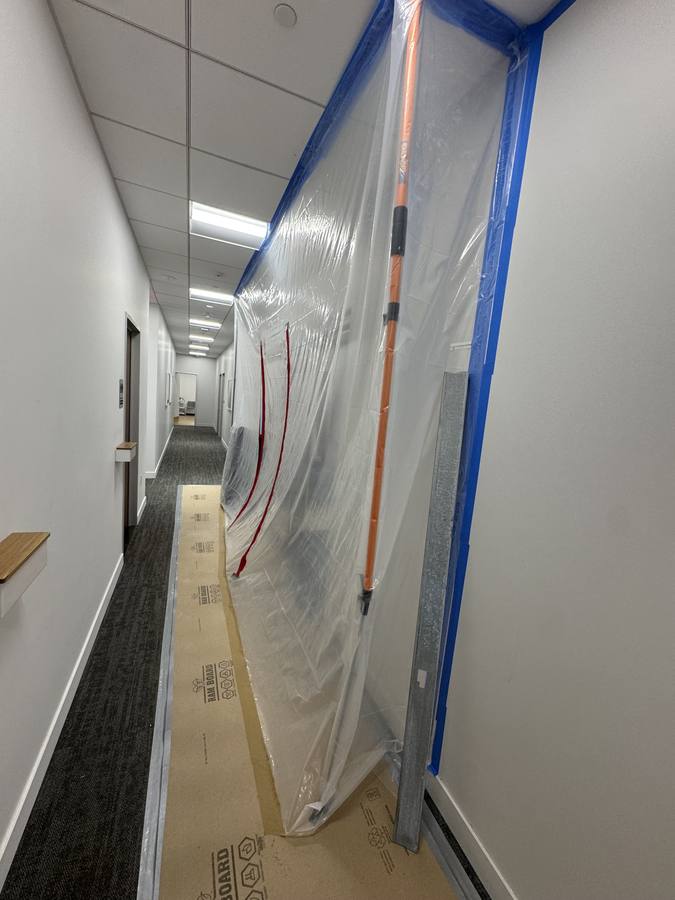
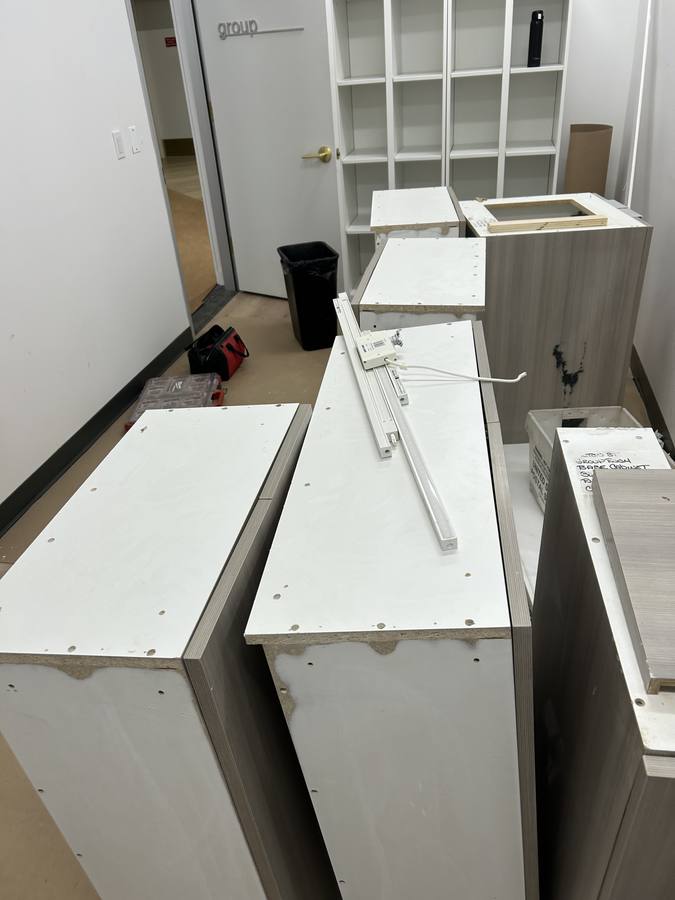
Before Active construction — containment, framing, and millwork staging
FiDi before — construction containment in corridor FiDi before — steel stud framing mid-construction FiDi before — millwork and cabinets staged for install FiDi before — cabinet components on floor awaiting assembly
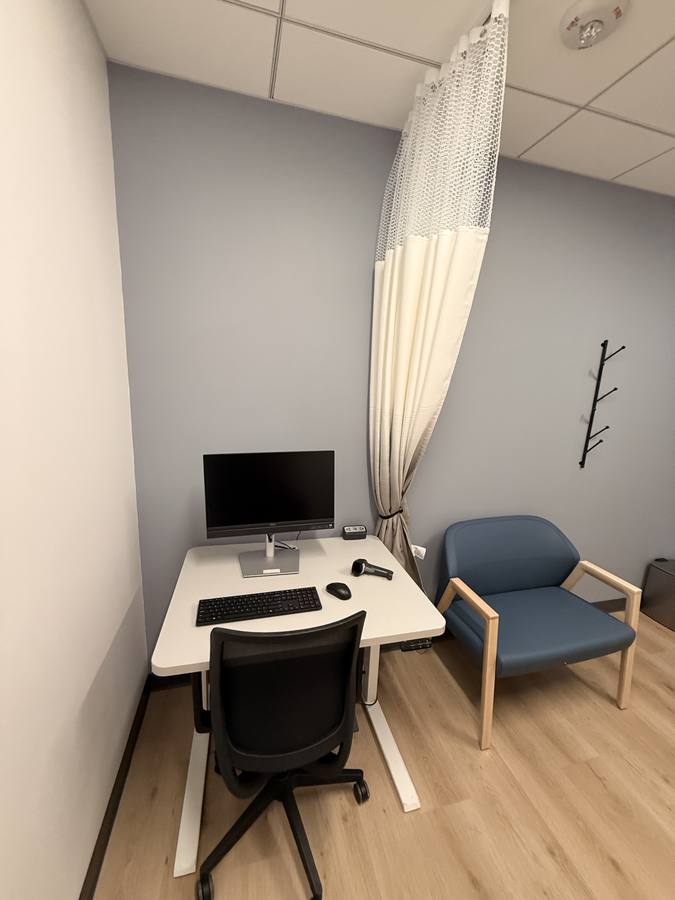
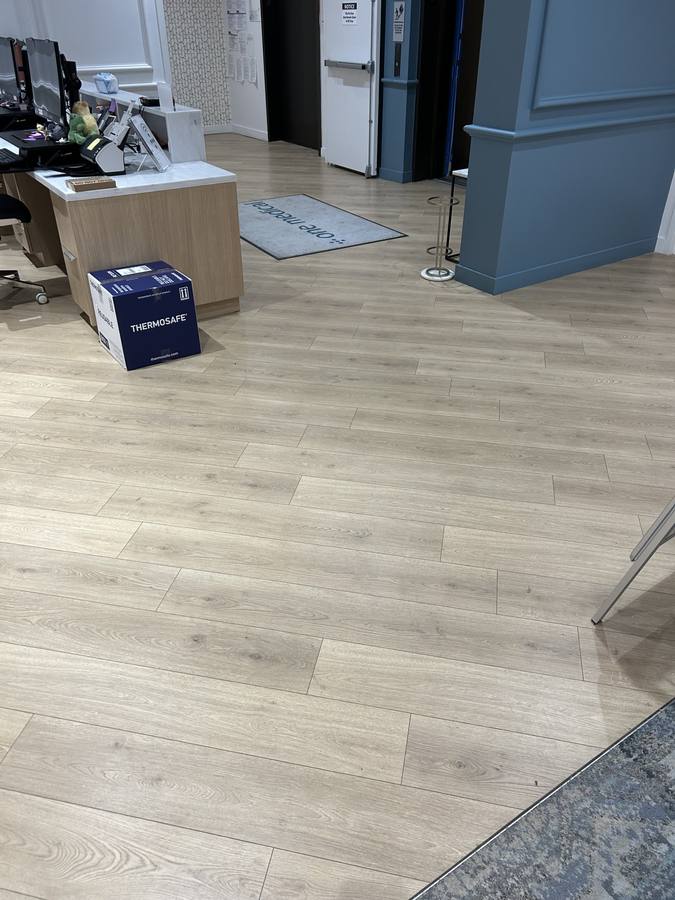
After Completed clinical space — fully operational with zero downtime
FiDi after — finished exam room with cabinetry and vinyl flooring FiDi after — completed clinical consultation room FiDi after — finished lab area with new LVP flooring FiDi after — phlebotomy area with chairs and curtains fully installed

Project delivered without a single disruption to patient care

Uninterrupted
Business operations — zero unplanned closures or disruptions
100%
Weekly TPP inspections completed and passed
All phases
Inspections closed out on schedule
Full compliance
DOB fire safety and TPP requirements met throughout

By treating the active medical office as a partner rather than a constraint, we delivered the full scope of work without a single unplanned office closure or patient care disruption.

HVAC & Technology

Proactive HVAC Management Through Remote Equipment Monitoring

How Nebula REM turns equipment data into proactive dispatches — before units fail

7
Live data points per unit
Real-time
Continuous performance monitoring
Proactive
Dispatch before failure occurs

The hidden cost of declining unit performance

  • Failures build slowly — invisibly

    HVAC units rarely fail without warning. There is almost always a performance degradation curve that, if monitored, tells a clear story well before a unit goes down. Without visibility, that slow decline goes undetected until it becomes an emergency.

  • Reactive management is expensive

    Emergency service calls carry premium labor rates. Parts that could have been replaced during a scheduled visit become critical failures requiring expedited shipping. And the downtime itself represents a cost no service invoice can fully capture.

  • You can't manage what you can't see

    Without real-time data, facility managers are flying blind — reacting to failures rather than preventing them. The core problem is a lack of visibility into what a unit is doing at any moment.

The Four-Stage HVAC Decline Curve

Stage 1 — Reduced Efficiency

The unit meets demand but works harder than it should. Supply air temperatures rise, runtime cycles lengthen, energy consumption creeps up. To anyone without data, nothing seems wrong.

Stage 2 — Increased Strain

Overall amperage rises as components work against degraded conditions. Space temperature starts to lag behind thermostat demand — the unit simply can't keep up.

Stage 3 — Onset of Failure

Vibration and sound signatures change. Bearing failures and imbalanced components produce acoustics that differ from a healthy unit. Amperage spikes become more pronounced.

Stage 4 — Downtime

The unit trips, locks out, or suffers a component failure. What could have been a planned, lower-cost repair is now an emergency call, extended downtime, and potentially a compressor replacement.

Nebula REM — catching the curve early

The REM installs directly on HVAC units and continuously streams operational data. Rather than waiting for a complaint or a failed unit, Nebula gives facility managers a live, data-driven picture of every monitored asset — tracking seven key data points:

Data Point What It Reveals
Supply & Return Air Temperature A narrowing delta indicates reduced heat transfer capacity and early coil or refrigerant issues.
Exterior Temperature Provides context to distinguish a unit struggling due to a fault versus extreme ambient conditions.
Space Temperature The real-world result — if the space isn't reaching setpoint, the unit is failing to meet demand.
Overall Unit Amperage A rising trend signals the unit is working harder than it should — often indicating refrigerant issues or dirty coils.
Blower Motor Amperage Elevated draw can indicate bearing wear, a dirty blower wheel, or motor degradation before catastrophic failure.
Unit Sound & Vibration Abnormal signatures are often the earliest indicators of a bearing failure or imbalanced components.
Thermostat Call Confirms what the unit is being asked to do, allowing Nebula to correlate demand against actual performance.

From reactive discipline to proactive management

Early detection
Anomalies flagged the moment they begin to emerge — days or weeks before failure
Informed dispatch
Technician arrives knowing what the unit is doing, not investigating from scratch
Planned repairs
Lower-cost scheduled visits replace emergency calls and expedited parts
Zero downtime
HVAC downtime is largely a consequence of not having the right information

HVAC downtime is not an inevitable cost of facility operations — it is largely a consequence of not having the right information at the right time. Nebula makes sure you never miss it.

Locksmith & Access Control

Fortune 100 Big Box & Wholesale Club Retailer – National Locksmith Program

Standardizing lock and key systems across one of the country's largest retail footprints

2,500
Locations served
30,000
Service calls completed
30%
Cost savings vs. other vendors
10 Years
Sustained partnership

Fragmented locksmith services across 5,000 retail locations

  • Inconsistent service and security standards

    Fragmented locksmith services across 5,000 big box and club retail locations meant inconsistent service quality, security standards, and costs — with no national standardization of lock and key systems.

  • Strict KPI-driven environment

    Weekly performance benchmarking with strict KPIs meant any vendor had to hit the ground running — and sustain performance over time, not just at launch.

  • Rapidly evolving customer needs

    Customer requirements evolved significantly during the initial rollout phase, demanding a partner flexible enough to adapt without breaking pace.

Standardization, proprietary security, and consistent execution

  • 1

    Standardized lock and key systems

    Delivered consistent lock and key systems across the entire assigned footprint, eliminating the patchwork of legacy hardware and service providers.

  • 2

    Proprietary keyway implementation

    Implemented a proprietary keyway system to improve security across all locations — reducing vulnerability and creating a standardized access hierarchy.

  • 3

    Centralized key hierarchy and inventory management

    Managed the full key hierarchy and key inventory centrally, providing consistent visibility and control across thousands of locations.

  • 4

    Consistent communication and rapid response

    Maintained clear, reliable communication and fast service response times — consistently meeting and exceeding all KPIs and service benchmarks throughout the program.

From 600 locations to 2,500 — #1 vendor ranking in 6 months

2,500
Locations expanded from an initial award of 600
#1 vendor
Ranking achieved within 6 months of program launch
30%
Cost savings delivered compared to other vendors
10 Years
Sustained partnership with consistent performance

Consistently meeting and exceeding all KPIs earned a rapid expansion of the program — and a decade-long partnership built on sustained performance and trust.

Locksmith & Access Control

Top-5 Global Financial Institution – ADA Compliance Program

Full ADA compliance across 400 bank locations in 9 states — on time, under budget, zero disruptions

$1.2M
Under budget
99.5%
First-time completion rate
1 Year Early
Delivered ahead of schedule
Zero
Disruptions to bank operations

Large-scale ADA compliance across 400 bank locations in 9 states

  • Initial vendor unable to execute

    The incumbent vendor could not meet the execution requirements of this program, requiring a new partner to be brought in mid-program without disrupting the project timeline.

  • All work required overnight execution

    Every location had to be started at close of business and completed before opening the next morning — with zero tolerance for disruption to daily banking operations.

  • Multi-state coordination at scale

    400 locations across 9 states required simultaneous regional deployment, full system integration, and consistent QC standards across every site.

Overnight execution with simultaneous regional teams

  • 1

    Deployed multiple regional project teams simultaneously

    Mobilized parallel project teams across all 9 states, ensuring consistent pace and quality regardless of geography — with no single region becoming a bottleneck.

  • 2

    Full system integration — hardware, mag locks, and access control

    Installed automatic door operators, wave-to-open push buttons, and mag locks fully integrated into the existing access control infrastructure at every location.

  • 3

    QC testing and sign-off before every morning open

    Each site was fully tested and signed off before the bank opened — ensuring zero disruption to operations and a 99.5% first-time completion rate across all 400 locations.

$1.2M under budget, delivered a full year ahead of schedule

$1.2M
Delivered under the original project budget
1 Year Early
Completed in 3 years vs. the 4-year project plan
99.5%
First-time completion rate across all 400 locations
Zero
Disruptions to daily bank operations across all sites

Taking over from a failing vendor mid-program, we delivered one of the largest ADA compliance rollouts in the financial sector — under budget, ahead of schedule, and without a single disruption to bank operations.

Locksmith & Access Control

Top-3 National Telecommunications Retailer – Nationwide Access Retrofit

700-location nationwide lock and access control retrofit across all 50 states, completed in 3 months

700
Locations across all 50 states
3 Months
Full program delivery
70%
Scope self-performed
On Budget
Delivered on time and on budget

New access control systems misaligned with physical hardware across 700 locations

  • Security vulnerabilities at rear entrances

    New access control systems were not aligned with existing physical locking hardware, creating active security vulnerabilities at rear entrances across all 700 locations in all 50 states.

  • 3-month completion window

    The full 700-location scope had to be completed within 3 months — a timeline that made traditional on-site survey methods cost-prohibitive and too slow.

  • 50-state national coordination

    With locations in every state, the program demanded a truly national self-performance capability and a vendor network that could cover every geography without gaps.

Remote surveys, mobile teams, and national self-performance

  • 1

    Remote surveys via in-store security cameras

    Eliminated costly on-site pre-surveys by conducting remote assessments using existing in-store security camera footage — reducing cost and accelerating the program start.

  • 2

    70% self-performance with mobile project teams

    Self-performed 70% of the total program scope using mobile project teams deployed across all 50 states — maintaining direct quality control on the majority of locations.

  • 3

    Standardized hardware and regional master key systems

    Installed standardized lock systems, reinforced entry points, and implemented regional master key systems with lockboxes — fully aligning physical security with the new access control infrastructure.

  • 4

    Full transparency and real-time communication

    Maintained real-time scheduling visibility and open communication with the client throughout — ensuring no location fell behind without immediate awareness and resolution.

700 locations across 50 states — delivered in 3 months

700
Locations completed across all 50 states
3 Months
Full program delivered on time and on budget
70%
Scope self-performed with direct quality control
Reduced
Survey costs through remote diagnostic approach

By combining remote survey methods with national self-performance and mobile project teams, we closed a complex 50-state security gap in 3 months — without compromising quality or budget.

Locksmith & Access Control

Top-10 U.S. Financial Institution – Badge Reader & Access Control Rollout

From single-region subcontract to 7-state program — and from subcontractor to acting General Contractor

7 States
Program expansion
1 → 5
Program managers
Lead GC
Converted from subcontractor
Multi-Year
Ongoing expanding program

Fragmented badge reader rollout under a traditional GC model

  • Multi-site rollout with fragmented execution

    The badge reader access control program was running across multiple sites under a traditional GC model — creating coordination gaps between badge systems, door hardware, and mag locks.

  • All work required overnight to avoid disruption

    Every installation had to be completed overnight, requiring precise scheduling and reliable execution to avoid any impact on daily financial operations.

  • Opportunity to consolidate and streamline

    The fragmented GC model was creating inefficiency. The opportunity existed to consolidate execution under a single accountable partner — and scale from there.

From subcontractor to acting General Contractor

  • 1

    Took over General Contractor responsibilities

    Consolidated full project execution under our management — coordinating electricians, painters, and finishing trades while owning scheduling, communication, and accountability end-to-end.

  • 2

    ADA-related door modifications alongside badge integration

    Executed ADA-related door modifications in parallel with badge reader and mag lock installations — maximizing efficiency across each overnight visit.

  • 3

    Performance drove expansion

    Strong execution in the initial region led to program expansion — scaling from 1 program manager to 5, and from a single region to a 7-state program.

From 1 region to 7 states — subcontractor to lead GC

1 → 5
Program managers as scope expanded
7 States
Expanded from a single-region starting point
Lead GC
Converted from subcontractor to program lead
Multi-Year
Ongoing program with continuously expanding scope

What started as a single-region subcontract became a 7-state, multi-year program — driven entirely by performance and the client's trust in our ability to lead.

Locksmith & Access Control

National Premium Grocery Chain – Vendor Consolidation & National Scaling

Absorbed 40 vendors, scaled service volume by 400%, and earned the #1 vendor ranking across the network

400%
Increase in service volume
#1
Vendor ranking in network
100%
Benchmarks met or exceeded
40 → 10
Vendor consolidation in progress

70 vendors creating inconsistency across a national grocery network

  • Fragmented vendor base at scale

    Approximately 70 vendors operating across the network meant inconsistent service quality, variable pricing, and no standardized approach to locksmith and access control across locations.

  • System transition requiring rapid consolidation

    Following a system transition, the client needed to consolidate approximately 40 vendors quickly — without allowing service quality or response times to decline during the changeover.

  • Significant increase in service volume expected

    Absorbing 40 vendors meant taking on a dramatically higher volume of service calls — requiring immediate operational scaling without a ramp-up period.

Rapid absorption, national scaling, consistent execution

  • 1

    Absorbed 40 vendors into a single national program

    Took over the service footprint of approximately 40 vendors, immediately standardizing service quality, pricing, and communication across all absorbed locations.

  • 2

    Scaled operations nationally without a performance dip

    Rapidly scaled across the national footprint while maintaining consistent performance — meeting or exceeding 100% of all service benchmarks throughout the transition.

  • 3

    Fast emergency response times maintained at scale

    Maintained the fast emergency response times the client required — even as service volume increased by 400% — through national coverage and pre-positioned resources.

400% volume growth — and the #1 vendor ranking in the network

400%
Increase in service volume absorbed without performance decline
#1
Top-performing vendor ranking across the national network
100%
Service benchmarks met or exceeded throughout
40 → 10
Vendor consolidation ongoing — positioned to absorb further

By scaling rapidly and maintaining performance throughout, we earned the #1 vendor ranking across the network — and positioned ourselves to receive additional consolidation as the client continues reducing their vendor base from 40 to 10.

Locksmith & Access Control

Federal Postal & Logistics Agency – After-Hours Access Control Integration

Enabling secure after-hours customer access without compromising facility security

Enabled
Secure after-hours customer access
Full
Security of restricted areas
1+ Year
Ongoing program
Expanding
Preferred vendor — additional scope

Enabling after-hours public access without compromising facility security

  • Customers needed access to PO boxes outside of business hours

    An extended hours initiative required customers to access PO box areas and locker systems after normal operating hours — a capability that didn't exist at participating facilities.

  • Strict security requirements for non-public areas

    While enabling customer entry, the solution had to ensure absolute security for all non-public facility areas — only the vestibule and lobby could be accessible to the public.

  • Integration of digital and physical access systems

    The solution required seamless integration between a QR-based digital access system and physical entry hardware — a technically complex requirement across multiple facilities.

ButterflyMX integration with time-based access control

  • 1

    Installed ButterflyMX access control at facility entrances

    Deployed ButterflyMX access control systems at participating facility entrances, providing the hardware backbone for digital QR-based customer entry.

  • 2

    Integrated with the federal postal QR code system

    Fully integrated the access control hardware with the agency's QR code system — enabling customers to use their existing digital credentials to enter during after-hours windows.

  • 3

    Custom interior pathway mapping per facility

    Mapped and controlled interior pathways at each facility individually — ensuring that only vestibule and lobby areas were accessible, with all restricted zones remaining fully secured.

  • 4

    Time-based access configuration

    Configured time-based access control settings to automatically restrict and enable customer entry according to each facility's specific extended hours schedule.

After-hours access enabled — full facility security maintained

Enabled
After-hours customer access across all participating locations
Full
Security of all restricted facility areas maintained throughout
1+ Year
Ongoing program with consistent performance
Expanding
Established as preferred vendor with additional project scope

By carefully mapping each facility's accessible vs. restricted areas and integrating physical hardware with the digital QR system, we delivered a secure after-hours access solution that expanded customer convenience without compromising facility security.

Locksmith & Access Control

Statewide Public Charter School Network – Compliance & Lock System Upgrade

42 campuses brought into full Texas legislative compliance — 6% under budget, in 3–4 months

42
Campuses completed
3–4 Months
Full program delivery
6% Under
Budget
Full
State compliance achieved

Texas legislation requiring automatic-locking classroom doors across 42 campuses

  • Non-compliant and inconsistent locking systems

    Texas legislation mandated that all classroom doors automatically lock — but existing locking systems across 42 campuses were non-compliant, inconsistent, and varied widely from campus to campus.

  • All work after hours, weekends, and school breaks

    Every installation had to be completed outside of school hours — requiring careful scheduling coordination across 42 campuses, 7 district managers, and 42 campus facility managers.

  • Multi-region coordination across a large geographic footprint

    The 42 campuses spanned North Texas (primary and secondary), East Texas, and West Texas — requiring simultaneous regional execution across a large and distributed footprint.

Survey, upgrade, and full compliance across all 42 campuses

  • 1

    Full campus surveys to baseline compliance status

    Surveyed all 42 campuses to identify compliant vs. non-compliant doors before any installation began — creating a precise scope of work for each campus and eliminating surprises.

  • 2

    Storeroom function locks and interchangeable core systems

    Installed storeroom function locks for compliance, implemented interchangeable core systems, and established master key hierarchies — standardizing security infrastructure across all campuses.

  • 3

    Coordinated across 7 district managers and 42 facility managers

    Managed scheduling, communication, and stakeholder coordination across a complex 49-person stakeholder map — keeping every campus on track without bottlenecks.

  • 4

    Education on long-term cost savings and key management

    Provided campus facility managers with guidance on the long-term cost savings and operational benefits of the new interchangeable core and master key systems.

42 campuses, full compliance, 6% under budget — in 3–4 months

42
Campuses completed across all four regions
3–4 Months
Full program delivered on schedule
6% Under
Budget — delivered below original projection
Full
Compliance with Texas classroom door safety legislation

From initial survey through final installation, we brought 42 campuses into full legislative compliance in 3–4 months — under budget and with an ongoing service relationship secured across the entire network.